
Read Daily Current Affairs for 16 October 2026, covered from The Hindu by Notes Baba. Get UPSC IAS current affairs analysis, key news and exam-relevant updates.
Sukhna Wetland as Ramsar Site
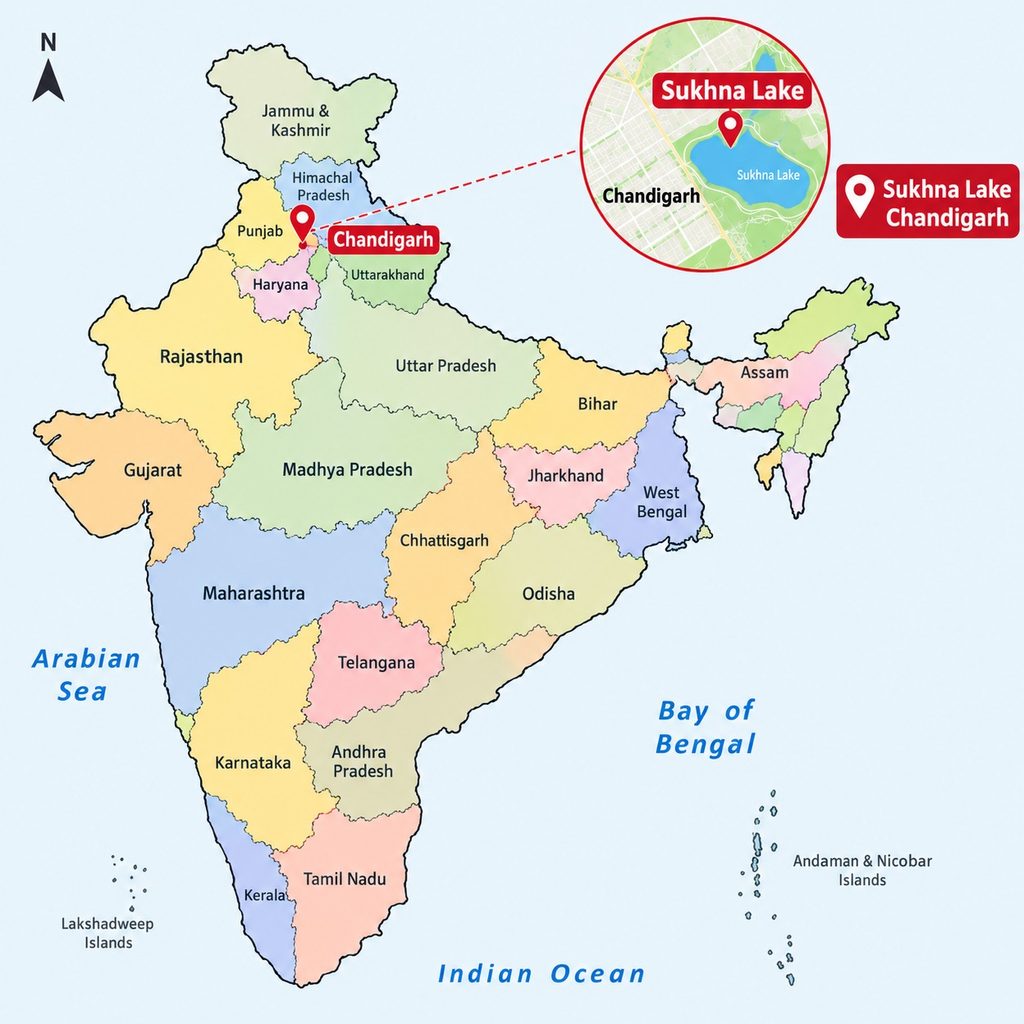
- Sukhna Wetland in Chandigarh has been designated as Ramsar Site.
- Also Sauj Jheel in Uttar Pradesh has been designated as Ramsar Site.
- India’s Ramsar sites tally reaches = 103.
- Greater International attention to its conservation efforts and global scientific oversight.
- Ramsar sites also called “Wetlands of International Importance under the Ramsar Convention“, an environmental treaty established in 1971.
SC on conversion’s reservation benefits
- SC declared that a Hindu belonging to a Backward order cannot claim the same reservation benefits as a Muslim Backward Class member merely on conversion to Islam or other religions.
- SC held that person who converts from a Hindu social order to a non-Hindu social order cannot claim affirmative action under Article 16(4) of the Constitution merely on the basis of the social backwardness associated with his pre-conversion status.
- Appeal :-
- Tamil Nadu State’s appeal was based on a Madras High Court decision to reject the petition of Sameer Ahamed, a convert to Islam.
- He was born to Hindu parents, changed his faith to Islam in 2015.
- He was issued a certificate of conversion by the Sunnath Jamath and subsequently applied for a community certificate certifying him as ‘Muslim Lebbai’, but the request was declined by the Tehsildar.
- SC clarified the law while dismissing a Tamil Nadu government appeal seeking confirmation of an order issued by the State government in March 2024 to provide reservation benefits to members of the Backward Classes, Most Backward Classes, De-notified communities, and Scheduled Castes who had embraced Islam.
- The policy of the State was intended to create a level-playing field by preserving affirmative action despite the change of religion.
- SC Held :-
- A Bench headed by Justice Prashant Kumar Mishra held that a member of a Backward Hindu community does not automatically become a member of a notified Backward Muslim community merely through conversion.
- It said a caste identity cannot be treated as an immutable personal attribute, irrespective of a change in religious affiliation.
- It said the constitutional benefits of reservation under Article 16(4) cannot be made to travel from the religion in which the backwardness arose to a religion of which the basic theological structure did not recognise caste as its foundational basis.
- No statutory benefit, protection, reservation or other entitlement under Article 16(4) of the Constitution, the enjoyment of which is predicated upon a particular Hindu social order, can be claimed or extended merely on the basis of such antecedent membership after the person has converted to Islam, Christianity or any other non-Hindu social order.
- Conversion severs the legal foundation of an entitlement specifically conditioned upon membership of that Hindu social order.
Article 16 (4) of Const. :- It allows the State to make provisions for reserving appointments or posts in public employment for any backward class of citizens that is not adequately represented in state services.
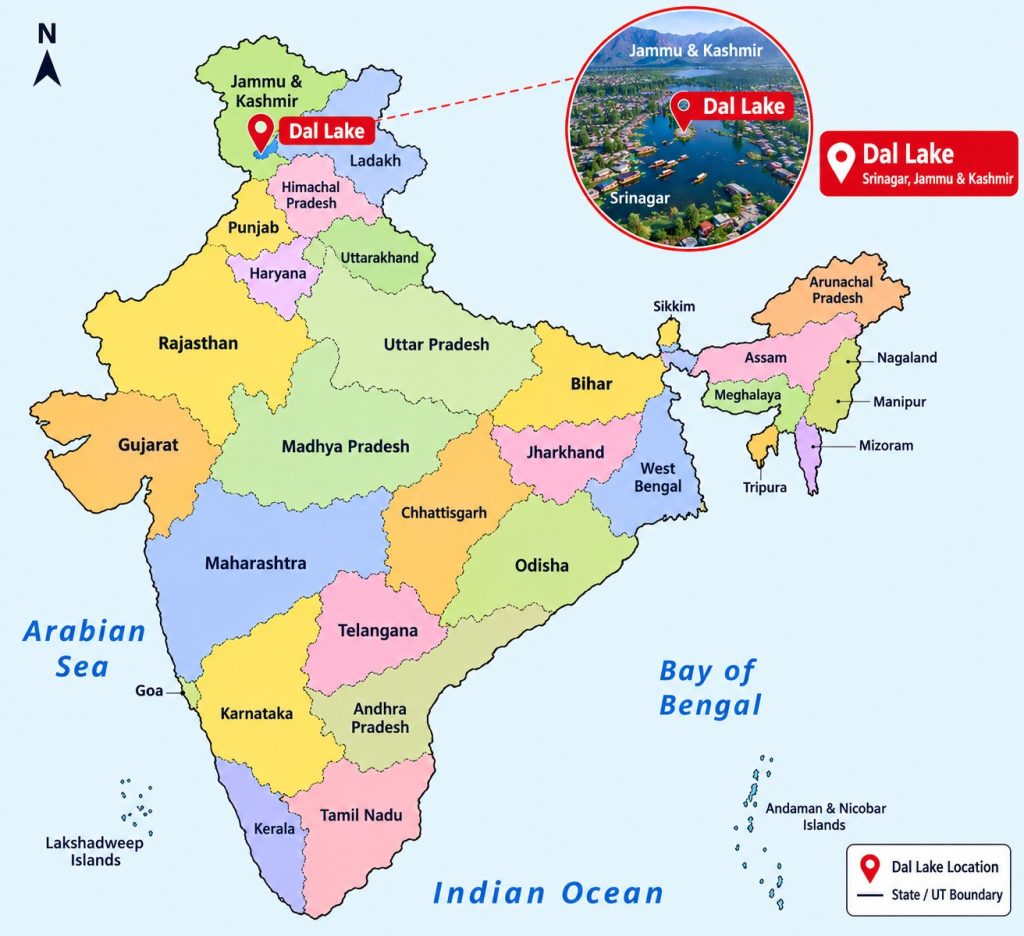
J&K High Court on Dal Lake
- J&K High Court banned the use of motorboats, both shikara motorboats and fuel-driven jet skis, on the Dal Lake and directed the government to explore the possibility of using solar-powered e-engines to check pollution.
- However, the court exempted the boats used by the administration and the authorities for the purpose of emergency services, law and order, and disaster management.
Talks between govt., Ladakh groups remain ‘inconclusive’
- Ladakh’s civil society groups and local leaders termed the fresh round of talks with a team of the Union Home Ministry in Leh “unsatisfactory and inconclusive” over demands of Statehood and Sixth Schedule.
- Now next round of talks on October 22 in New Delhi.
- Meeting Attendees :-
- Leh Apex Body (LAB),
- Kargil Democratic Alliance (KDA),
- Amalgams of socio-religious groups in the region,
- Climate activist Sonam Wangchuk,
- BJP leader Tashi Gyalson,
- Ladakh Autonomous Hill Development Council, Kargil,
- Chief Executive Councillor (CEC) Mohammad Jaffer Akhoon.
- Ministry made a 15-page presentation with details on the way forward.
- Gaps between two drafts –
- Draft by Union Home Ministry,
- Draft by LAB, KDA and member of key groups.
- Critics of talks :-
- Gaps between the two drafts and did lack consensus.
- Main demands of having a legislature for Ladakh and special provisions under Article 371K “will see no dilution”.
- It does not match the demands of Ladakhis.
- Will continue to seek democratic and constitutional rights and guarantees.
- In the face of protests from Ladakhi civil society groups since 2019, a major breakthrough was achieved in July this year when the Centre suggested it was considering a customised sui generis model, most suitable for Ladakh, under provisions of Article 371 of the Constitution and a legislature for the region.
Sui-Generis Model :- It is a custom-tailored legal, institutional, or conceptual framework designed for a specific subject matter that does not fit neatly into standard or pre-existing categories.
MoD signs ₹4,106-cr. deals for IAF satellite, torpedoes
- Ministry of Defence signed contracts worth approximately ₹4,106 crore for a dedicated communication satellite for the Indian Air Force (IAF) and Varunastra heavy-weight torpedoes for the Indian Navy, in a push to strengthen indigenous defence capabilities.
- Contract covers :-
- Acquisition of GSAT-7C, valued at ₹2,563 crore, from New Space India Limited (NSIL), Bengaluru –
- The GSAT-7C satellite, indigenously designed, developed and manufactured, will enhance secure, resilient and seamless communication capabilities for IAF assets, strengthening the force’s operational effectiveness.
- It is expected to improve the IAF’s ability to maintain reliable communications in support of its operational requirements.
- Varunastra heavy-weight torpedoes worth ₹1,543 crore from Bharat Dynamics Limited (BDL), Hyderabad –
- Varunastra, an indigenous ship-launched anti-submarine warfare torpedo developed by the Naval Science and Technological Laboratory (NSTL).
- Equipped with advanced manoeuvring capabilities, the heavyweight torpedo can engage enemy submarines at long ranges, enhancing the Indian Navy’s underwater warfare capabilities.
- Acquisition of GSAT-7C, valued at ₹2,563 crore, from New Space India Limited (NSIL), Bengaluru –
- The contracts were signed in New Delhi in the presence of A. Anbarasu, Additional Secretary and Director-General (Acquisition), Department of Defence.
Rajnath Singh to represent India at SCO PMs’ summit
- Defence Minister Rajnath Singh will represent India at the upcoming two-day meeting of the Council of Heads of Government (Prime Ministers) of the Shanghai Cooperation Organisation (SCO) in Dushanbe, Tajikistan, on October 19 and 20, while Prime Minister Narendra Modi is expected to participate virtually, a senior government official said.
- The meeting will be held under Tajikistan’s SCO chairmanship for the year.
- Main Focus – Practical cooperation among member states, particularly in trade, and commerce.
VP commissions Indian Navy’s First Indigenous Multi-Purpose Vessel INS Samarthak
- Vice-President of India, Shri C. P. Radhakrishnan, commissioned INS Samarthak, the Indian Navy’s first indigenous Multi-Purpose Vessel, at Karwar, Karnataka.
- Highlights :-
- Highlighting India’s rich maritime heritage, VP recalled the naval traditions of Chhatrapati Shivaji Maharaj and the Chola dynasty, which extended India’s maritime influence across the Indian Ocean and Southeast Asia.
- VP appreciated its role as a first responder and a preferred security partner in the Indian Ocean Region, including anti-piracy operations, the evacuation of Indian citizens and humanitarian assistance and disaster relief missions.
- VP said that the vessel will serve as a versatile platform for trials and evaluation of next-generation weapons, sensors and emerging technologies.
- He highlighted the ongoing development of modern naval infrastructure under Project Seabird, which is enhancing the Navy’s capacity to base and sustain ships and submarines while generating wider economic opportunities for the region.
- VP also underscored the growing partnership between the Indian Navy, defence public sector undertakings, private shipyards, DRDO, academia, MSMEs and start-ups in strengthening India’s defence manufacturing ecosystem.
- Capibilities :-
- maritime surveillance and reconnaissance,
- offshore patrolling,
- launch and recovery of targets,
- operations involving unmanned systems, and
- humanitarian assistance and
- disaster relief.
UMCT will confer the Ustad Bismillah Khan Yuva Puraskar
- Union Minister of Culture and Tourism, Shri Gajendra Singh Shekhawat will confer the Ustad Bismillah Khan Yuva Puraskar for the years 2024 and 2025 to 106 young artists in the field of music, dance and drama on 19 October 2026 at Meghdoot Complex, Rabindra Bhavan, New Delhi.
- The Ustad Bismillah Khan Yuva Puraskar was instituted by the Sangeet Natak Akademi in 2006 to recognize young artists up to the age of 40.
- The General Council of Sangeet Natak Akademi, at its meeting held from 22-26 March 2026 at New Delhi unanimously selected 106 young artists for the award and award carries a purse money of Rs. 25,000/- besides a Tamrapatra and an Angavastram.
14th India-Mongolia Joint Working Group meeting
- 14th Joint Working Group meeting between the Defence Ministries of India and Mongolia took place in Ulaanbaatar on 16 October 2026.
- Meeting Highlights :-
- comprehensive review of ongoing bilateral defence cooperation activities,
- assessed the progress of existing initiatives,
- deliberated on measures to expand cooperation in mutually identified areas,
- reaffirming the commitment to further strengthen the longstanding partnership through sustained dialogue,
- exchanged perspectives on regional and international developments,
- Successful conclusion of the Nomadic Elephant exercise showcasing India and Mongolia’s commitment to strengthening bilateral defence cooperation,
Indian scientists identify a few Martian analogue sites
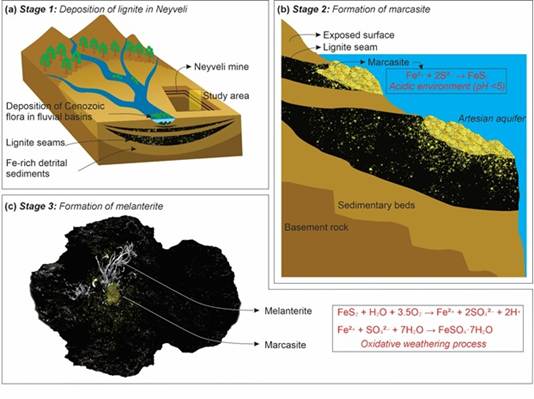
- Two key minerals identified in areas of Tamil Nadu and the Atacama Desert in Chile, which reflect geological, chemical, and physical similarities with Mars, have helped establish these as Martian analogue sites.
- High-precision, state-of-the-art analytical tools are essential for these investigations.
- Found :-
- Identified =
- melanterite in Neyveli, Tamil Nadu, and
- Gypsum in the Atacama Desert (Chile) and
- the Tiruchirappalli Badlands, a semi-arid geological and paleoclimatic terrain in Tamil Nadu.
- Used Advanced instrumentation, including a laser Raman spectrometer, supported by the DST-FIST at the Department of Geology, University of Kerala.
- Both minerals are hydrous sulphates that record water–rock interactions. While gypsum preserves evidence of past aqueous environments, melanterite indicates transient wet, acidic, and oxidizing conditions, processes relevant to those inferred on Mars.
- DST-FIST-supported Laser Raman Spectrometer was used to detect the distinctive spectral fingerprints of the minerals and confirm their identification.
- Melanterite provides evidence for short-lived wet conditions through sulphide oxidation, a process relevant to sulphate formation on Mars, while gypsum records past aqueous activity and can preserve biosignatures within its mineral matrix.
- Identified =
- The team is now focusing on rare analogue sites in extreme conditions across different parts of the globe to understand primitive life for astrobiological studies, using the same facility.